Paul Folland
Easter Sunday: Freedom found in a Resurrected life
Peter runs towards the possibility that Jesus has come back from the dead as he said he would.
Readings
Luke 22: 54-62 and Luke 24: 1-12
Thoughts
The scriptures in Luke's gospel account focus upon the reactions of Peter. Peter was in many ways the leader of the other disciples.
He was the one who walked on water and who first identified Jesus as the ‘Messiah, Son of the Living God’ (Matthew 16:16).
He was also the one who declared that ‘Even though they all fall away, I will not’ (Mark 14:29), and yet only hours later Peter denies Jesus for the third time, just as Jesus predicted.
And at that moment of denial, Jesus makes eye contact with Peter, and he remembers what Jesus had said, and goes outside to weep bitterly (Luke 22:62). This is a clear expression that Peter feels a sense of failure, or betrayal, and shame – He has let down his friend, and his Lord.
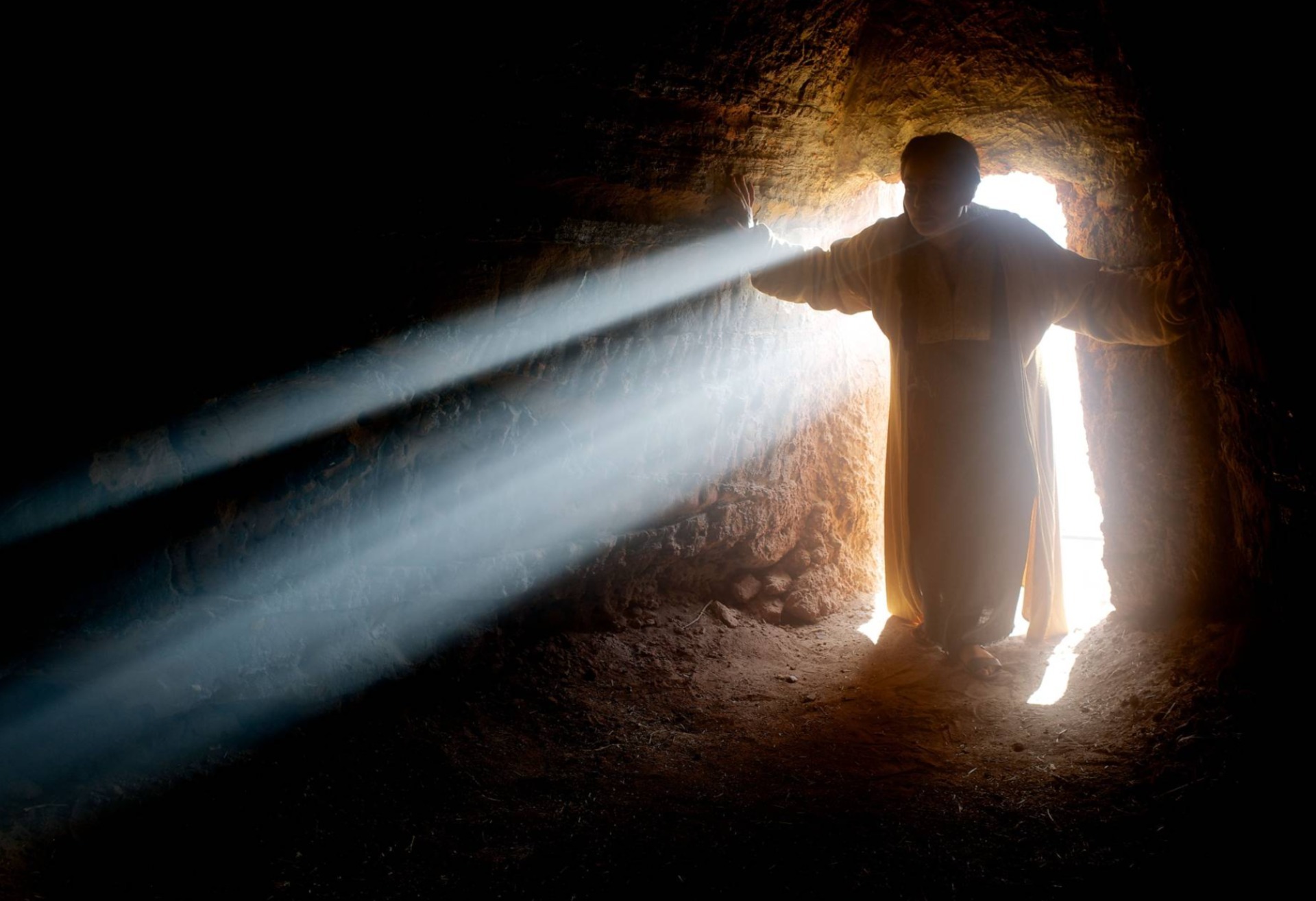
In Luke 24, we read the account of the resurrection. The women attend the grave and Jesus is not there.
When they return to the disciples to let them know what has happened, most of them say it sounds ‘like nonsense’.
But Peter leaps up and runs to the tomb; running towards the possibility that Jesus has come back from the dead as he said he would.
Application
We know the end of the account – Jesus has come back to life, he has conquered the grave, he has taken the ‘cup of wrath’ and offered us the ‘cup of salvation’ in its place.
Hebrews 10:10 records that ‘we have been made holy through the sacrifice of the body of Jesus Christ once and for all’.
That is what Jesus has achieved for us: we are forgiven for the things we have done wrong; we are now holy before God; free from feeling the eternal consequence of our sin; and we are destined for an eternity with him.
The challenge for us sometimes is to accept that, and then live within the peace and security knowing the Love of God towards us.
When we see Peter in Luke 22:62 he is crushed with disappointment having let Jesus down. Yet, when the possibility exists that Jesus is still alive, he runs towards where he thinks Jesus is.
Do we do that?
When we become aware of the mistakes we have made, do we run towards God, or seek to hide from him in shame?
In the Garden of Eden, Adam and Eve chose to cover up, to hide from God, and to blame others for what they had done (Genesis 3:7, 10, 12-13).
The work of Jesus gives us a different option – that ‘in Him (Jesus) and through faith in Him (Jesus) we may approach God with freedom and confidence’.
When Peter meets Jesus in John 21:7-17 we find that instead of running towards Jesus, Peter choses to try swimming towards him instead.
This leads to a conversation on a beach over breakfast.
Maybe Peter was expecting his failure to be discussed or analysed?
Instead, Jesus just asks Peter ‘Do you love me?’
Instead of condemnation, Peter finds restoration; instead of rejection, Peter finds acceptance; instead of isolation, Peter finds a renewed sense of purpose and mission.
The offer of Jesus is one of complete forgiveness, restoration, and renewed purpose in him.
That is what He died for, and that is what He proved in his resurrection.
If you are hiding from Jesus, affected by shame, afraid of what he might say if you reveal what your heart is feeling, then take confidence from the account of Peter.
The death and resurrection of Jesus has shown the depth of his love for you – so run (or swim if you prefer) towards his love, forgiveness, freedom, and joy.
Prayers
Thank you Jesus that in your resurrection you have proved your love for me.
Thank you that when we confess our sins to you, you welcome us back into your presence and love.
Help me to walk closely with you, to hear your voice, to keep your commands, and to live in the peace and security of your love, so others can recognise you in my life. Amen.
Revd Paul Folland is Pastoral Dean at Regents Theological College, where he also teaches both undergraduate and postgraduate students. Regents is at the heart of the Elim Churches training programmes, and has been releasing people into ministry and mission for over 95 years.
These daily thoughts and responses are part of a series of eight by members of the Regents faculty for Holy Week 2022. They were written with the idea that they can be to used as a personal reflection over Easter, or with home groups, and also as part of a wider church ministry.
Enjoy this content? Don't forget to share